Caroline Moassessi
Vice President,
Community Relations
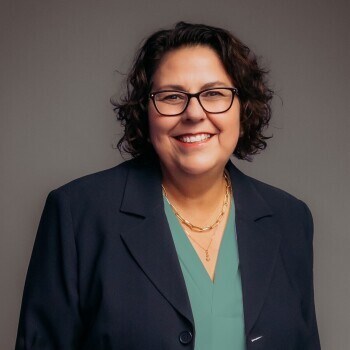
Caroline Moassessi
Vice President, Community Relations
Celebrating a friend’s two-year birthday, I dished out lemon sorbet ice cream. As the fun winded down, I changed Cyrus’ diaper for our short, 20-minute drive home. I noticed some hives on his diapers, but didn’t overthink it. Slipping on his pajamas, I saw the hives were growing and moving across his body. They looked like continents trying to merge into one giant hive. Suddenly, he started breathing rapidly. I didn’t know what was happening, but I knew it wasn’t right.
I called the pediatric after-hours phone line. They advised me to give Cyrus Benadryl and if there were no improvements or changes, to head to the Emergency Room. Thankfully, I had Benadryl on hand. Within 15 minutes, his breathing normalized, and the hives disappeared.
Worried, I called the pediatrician first thing in the morning. He very sternly explained that I was not to come into the office, but to call the allergist immediately and to say we needed an appointment no later than the next day. The following day found us in the allergist’s office. After testing, the doctor came into the exam room. In less than five minutes, the doctor explained that my son had food allergies. He needed to avoid peanuts, tree nuts, eggs, dairy, fish, shellfish, lemon, lime, raspberries, and sesame. He showed us how to use an epinephrine auto-injector and bid us farewell. In the hallway, I asked if there were any national organizations or groups where I could learn about food allergies. He said maybe. Stunned and confused, we drove the river and sat. We didn’t know what to do.
The following morning at my son’s swim lesson, a woman walked up to me. She explained that she was the nurse conducting Cyrus’ allergy testing. She knew that our brief five minutes with the doctor was not enough time for us to grasp the severity of food allergies. The nurse told me that she didn’t think we fully understood managing food allergies and our son’s life depended on us becoming food allergy educated. She gave me good advice about day-to-day living and clearing out my pantry and then wished us well.
After a series of twists and turns, I ended up attending what I thought was a lecture. It was a food allergy support group meeting in the San Francisco Bay Area. The allergist at this meeting explained that he can only diagnose, but that the women in that room would teach me how to live with food allergies. At the time, we lived in Reno, NV, and my husband worked in the Bay Area. I knew I needed those women, who are still my friends to this day. I went home and said I was invoking “Mama Veto Power”. That we were temporarily moving back to the Bay Area and into my dad’s home so I could learn from this extraordinary group of women and to see this allergist.
Fast forward to today, my son is 21 years old, and my daughter, age sixteen, developed tree nut allergies at age three (I wish we knew about early introduction back then). The allergist is now a good friend and has traveled to Reno numerous times to lecture local and statewide nurses about food allergies and asthma.
I’ve learned that we truly are all in this together. But without each other, the food allergy world does not turn. The need to share, talk, meet up, and learn is higher than ever. Technology helps us find solutions at 2 am, but speaking to other families is what brings it all together and helps us learn how to put those solutions into motion. We also need connections to others who understand us and support our relentless questions at restaurants and grandma’s house. We need those who talk us off the ledge, when our children are unjustly excluded. We need those who share our fears and then gently guide us out of the fear state.
My children are now young adults managing their food allergies and asthma, and each age and stage is a beautiful challenge that I never would have survived if it wasn’t for my connection to this community.