
Eleanor Garrow-Holding
President &
Chief Executive Officer
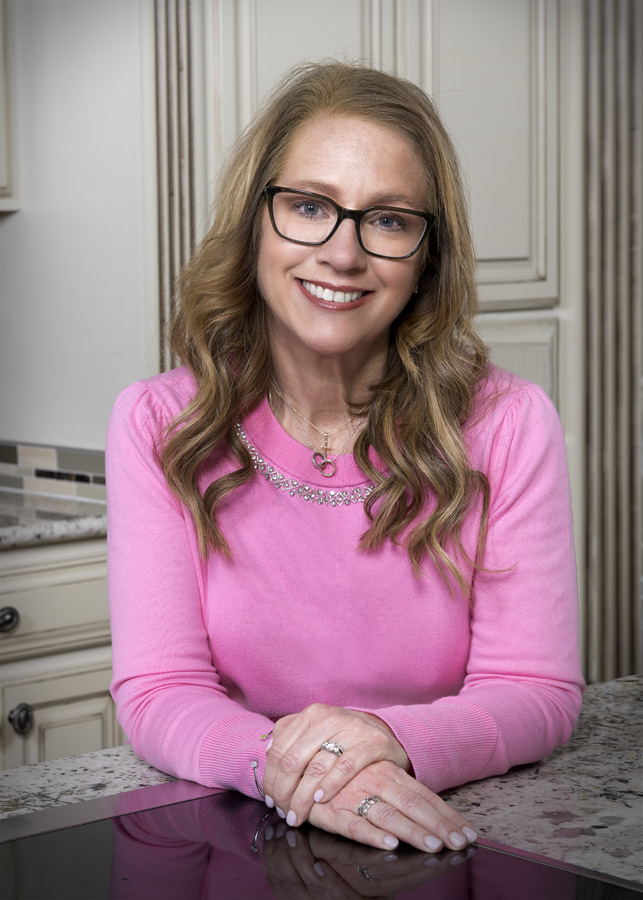
Eleanor Garrow-Holding
President & Chief Executive Officer
In 2004, when my son Thomas was 19 months old, he had his first anaphylactic reaction to pecans at a family birthday party. Just one bite and about 30 seconds is all it took for Thomas to have an anaphylactic reaction. He had hives from head to toe, swollen lips, eyes swollen shut, coughing, and shortness of breath. There were no antihistamines or epinephrine in the house. My mother is a nurse, and I worked in hospital management. We knew immediately that Thomas was having an allergic reaction.
We drove Thomas straight to the emergency room in the suburban Chicago town we were visiting. It was seven minutes from that one bite to the ER entrance, and Thomas was unrecognizable to me. He was so swollen and disfigured that I could not tell he was my son. The ER team was waiting outside for us as we pulled up, and they immediately took Thomas from my arms. They administered three doses of epinephrine, antihistamines, prednisone, and oxygen. He was hooked up to heart and lung machines. It was almost three hours before Thomas started to look himself again. He was admitted to the Pediatric Unit for observation through the night and to make sure he didn’t have a biphasic reaction. It was the scariest day of my life. I had no idea why this was happening to “my” child.
We were not given a prescription for an epinephrine auto-injector, but were told to follow up with our pediatrician the next afternoon after we were discharged from the hospital. Our pediatrician, also a food allergy parent, gave us a prescription for two sets of epinephrine auto-injectors, and then we scheduled an appointment with a board-certified allergist at Children’s Memorial (now Lurie Children’s) in Chicago for accurate testing and diagnosis. Thomas was diagnosed with IgE-mediated food allergies to all tree nuts, peanuts, and sesame. Our board-certified allergist and allergy nurse were amazing. They took the time to educate us on how to recognize signs and symptoms of anaphylaxis and how to and to know when to administer epinephrine. I felt as if I were the only parent this was happening to and felt alone, but they gave me resources to learn and a list of suburban support groups to get involved with to meet other families.
Of course, I had no knowledge about food allergies or anaphylaxis when this happened to us, nor did I ever know anyone with food allergies – even with a healthcare background. I was determined to learn everything I could to keep Thomas safe and to educate myself, my family, and our friends. I started a support group in the suburb where we lived and provided education and outreach, advocated for state legislation for School Food Allergy Management Guidelines and Insurance Coverage for Elemental Formulas, and raised funds for food allergy and anaphylaxis education and research.
When Thomas was diagnosed, I was five months pregnant with my daughter and worried if she would have food allergies, as well. I had gestational diabetes (diet-controlled) with both pregnancies and had a c-section with both children. When Anne was 14 months old in 2006 (Thomas was three), we were part of a food allergy study at Lurie Children’s in Chicago where we were all tested for food and environmental allergies via skin and blood among other tests. Thankfully, Anne’s results were negative to everything. My prayers were answered. From that point on, I introduced peanut into her diet because I didn’t want her to become allergic. At first, I would take her outside of our home to ice cream shops where she would consume vanilla ice cream with peanut butter or a chocolate peanut butter cup. She loved peanut butter. From 12 months to 24 months, Anne only gained one pound and presented with feeding, speech, sensory meltdowns, and other issues. After a full Gastrointestinal/Nutrition/Speech, Physical, and Occupational Therapy work up at Lurie Children’s, Anne was diagnosed with Sensory Processing Disorder (SPD). She was sensitive to touch, couldn’t express her words, and was very sensitive to textures of foods. She only ate a few items, and our doctors said keep feeding her what she is eating because she needs to gain weight. That is when I brought peanut butter into our home because she loved it and needed the fat and protein that it provided for her diet. We took extra precaution and were very careful. She ate it in the same area each day, away from Thomas. I would sanitize her highchair, wash her hands with soap and water, wash her face, and brush her teeth. I stored the peanut butter high in a secluded cabinet where Thomas could not reach it. After four years of private speech and occupational therapy, including feeding therapy, Anne had overcome many of the obstacles that come with SPD. And, to this day, she still eats peanut butter daily, but is and always has been a wonderful advocate for her brother and all the friends we’ve made through the years in our food allergy journey.
When Thomas turned three, he was diagnosed with asthma and environmental allergies to dog, cat, and mold. When he turned four, he was officially diagnosed with Eosinophilic Esophagitis (EoE) - after a year of food restrictions, endoscopies, a PPI - triggered by milk and wheat. Thomas later developed an IgE-mediated food allergy to wheat after reintroducing it back into his diet to see if he had outgrown the EoE trigger. I knew then that I wanted to do more on the national level, and in 2009 I was offered the Vice President of Education position at the Food Allergy & Anaphylaxis Network and served in that role for four years.
In January 2013, I realized my journey to educate, advocate, and raise awareness was not complete and formed the Food Allergy & Anaphylaxis Connection Team (FAACT). FAACT is for every person affected by food allergies and anaphylaxis because we are all connected, and we all work together as a team to educate and advocate.
In December 2015, Thomas had a food challenge with wheat and was no longer IgE-allergic to wheat. After a 3-month trial with wheat and another 3-month trial with milk (post wheat) in his diet and upper endoscopies, he had also outgrown the wheat and milk triggers for EoE and is in remission from EoE as of July 2016. Thomas outgrew his peanut allergy at age thirteen in 2016. In October 2019, Thomas outgrew almond, sesame, and brazil nut and continues to avoid walnut, cashew, pecan, hazelnut, and pistachio. Thomas lives confidently each day and continues to be his best advocate. I worry every day and always will, but I couldn’t be prouder of him.
My goal is for FAACT to provide you with everything you need for your family to be healthy and safe and to provide the day-to-day support needed - at home, for caregivers, visiting grandparents, for daycare and/or school, dining out, traveling, and more. We are here for you. Welcome to the FAACT family!