Allergy Advocate Personalities: Strong Advocates Represent Multiple Perspectives
Subcategories
Allergy Advocate Personalities: Strong Advocates Represent Multiple Perspectives
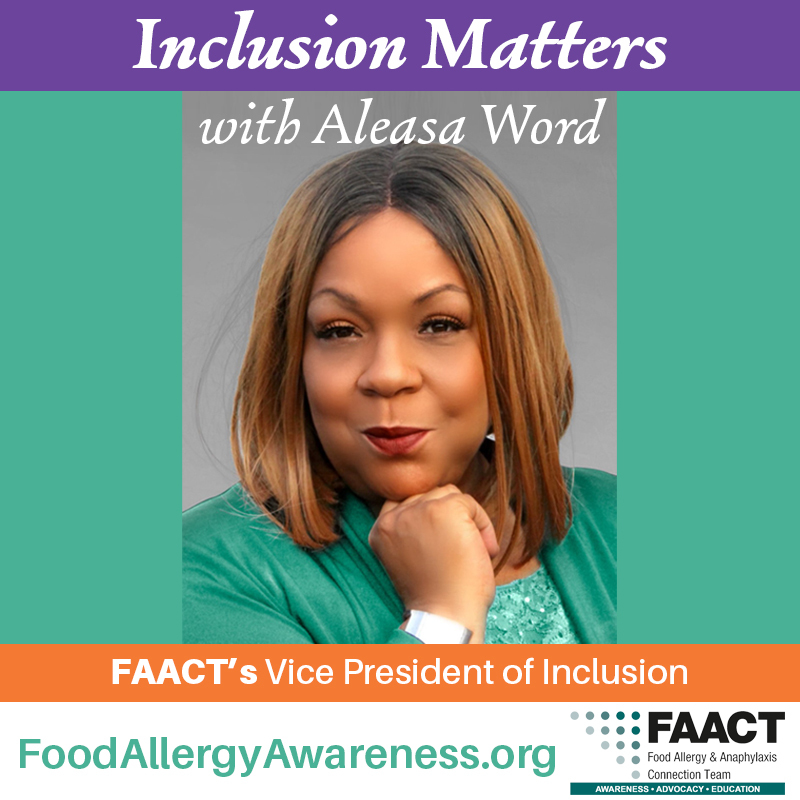
by Aleasa Word, FAACT Vice President of Inclusion Initiatives
December 2025
Managing food allergies is never a one-size-fits-all journey. Families, individuals, caregivers, and healthcare professionals all show up differently in their advocacy. Those differences shape how safe, supported, and confident someone feels navigating a world full of risks.
Over years of working with families and communities, one truth has become clear: food-allergy management is as much about people as it is about allergens. Some things to consider:
- Some people advocate quietly
- Some advocate loudly
- Some seek peaceful solutions first
- Some analyze every detail
- Every style of advocacy has value
Below are four common advocacy personalities you may recognize in yourself or someone you know. The goal is not to label people but to understand strengths, blind spots, and how each style can work together to create a strong, well-rounded support system.
- Shame-Filled Shelly: Quietly Advocates With a Heavy Heart
Shelly is caring, thoughtful, and deeply aware of her food allergies. Unfortunately, she carries her diagnosis as if it’s an invisible emotional weight saddled around her body. She doesn’t like to be an inconvenience to others, so she avoids speaking up at restaurants, at family events, or in school settings. When someone asks about her food allergies, she usually becomes uncomfortable. At times she’s even downplayed the severity of her food allergies. Sometimes she removes herself from situations all together. Her advocacy is silent—not because she doesn’t care, but because she feels like a burden.
People like Shelly are often self-silencing. They say things like, “It’s ok, I’ll just eat later” or “Don’t worry about me, it’s fine.” Or even “I’ll just stay home/sit this one out, its fine.”
Shelly’s biggest need: affirmation and support. She needs to understand that food allergies are not her fault. They are not an inconvenience. They are her medical reality, and that is just fine! When Shelly feels emotionally supported, she may find comfort in knowing that advocacy isn’t about taking up space, it’s about taking care of her health.
- Fierce Fred: The Protector With the Big Voice
Shelly may whisper, but Fred is the total opposite: he’s loud and noticeable. Fred is that family member or person with an allergy who does not play games when it comes to safety. He reads every ingredient list, asks every question, challenges misinformation, and sometimes becomes the voice for everyone in the room. His assertiveness is his strength to help prevent dangerous situations. Fred is the one who keeps people accountable when others forget the seriousness of food allergies.
However, sometimes Fred’s protectiveness turns into confrontation. His intentions are good, but if the situation doesn’t require escalating, he may unintentionally create tension or overwhelm others.
Fred’s biggest need: balance. Fred has an opportunity to grow his self-awareness, pausing long enough to ask questions before heading in feet (or mouth) first.
Fred can benefit from asking questions like, “Is this a genuine safety threat?” or “Is this the right moment for full advocacy mode?” Or possibly, “Is my emotion helping or hindering right now?” When Fred acts with both courage and discernment, he becomes an incredibly effective advocate in whatever setting he’s in who can protect while continuing to educate others.
- Peaceful Penelope: Calm, Thoughtful, and Solution Driven
Penelope is the family diplomat. She listens, strategizes, and looks for the smoothest path forward. She is the one who says things like, “Let’s see what accommodations are possible,” “Maybe there’s a safe alternative we can bring,” or “Let’s communicate ahead of time so everyone is on the same page.”
Penelope understands that not every environment will meet every accommodation. She knows where we can go lightly and where there are non-negotiables that must be honored. Her superpower is helping reduce conflict around food allergies, especially in situations where others might feel defensive or resistant.
Penelope’s biggest need: realistic boundaries. Penelope’s desire for peace can sometimes lead to compromises that aren’t safe. In her effort to keep harmony, she may unintentionally under-advocate in moments that require firmness.
Growth opportunities include staying vigilant, holding boundaries even when it feels uncomfortable, and remembering that safety is not negotiable. When Penelope combines her calm spirit with confidence, people listen and collaborative advocacy happens.
- Knowledgeable Kyle: The Researcher and Resource Keeper
Kyle is the person who gathers ALL of the information. He knows the science, stats, cross-contamination risks, federal regulations, serve-safe training, emergency protocols, and latest updates from allergists and other reputable organizations. Kyle’s strength is clarity, which helps him ensure decisions are grounded in facts, not fear.
Kyle’s biggest need: avoid the trap of analysis paralysis.
Sometimes, constantly gathering information can prevent action. Kyle spends so much time researching that he delays making simple decisions. At other times, he overwhelms himself and others with too much data.
Although he makes sure every resource is evidenced based, reputable, and not influenced by online myths or viral misinformation, Kyle must learn to find a middle road to avoid data dumps that are so big they cause confusion. When Kyle balances his love of learning with practical application, he can become an essential asset to everyone touched by food allergies.
Moral of the Story
You don’t have to be just one personality type. The perfect mix is when you pull from them all: Shelly’s empathy, Fred’s courage, Penelope’s calm strategy, and Kyle’s knowledge. When these qualities come together in one person or group, advocacy becomes a stronger tool for sustainable support for those with food allergies.
Food-allergy safety is not the responsibility of a single person or personality type. It’s a collective, evolving effort. Some days require fierceness. Others require peace. Sometimes we need research, and sometimes we simply need to validate someone who feels overwhelmed. Ultimately, we all are better when we combine our strengths for good.