Seeing Us Differently in 2026
Subcategories
Seeing Us Differently in 2026: A Human-Centered Approach to Food Allergy Inclusion
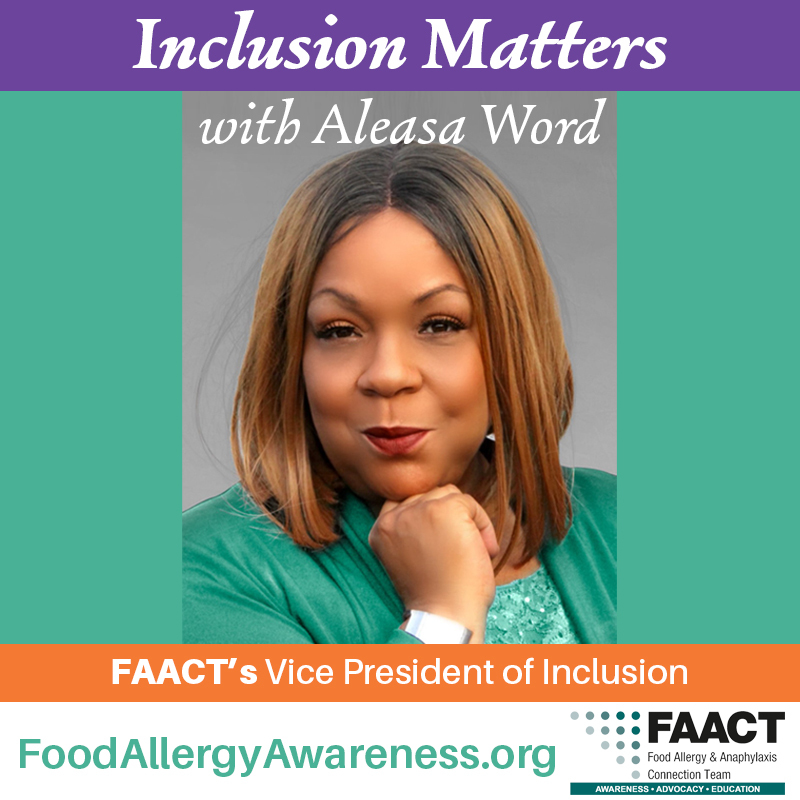
by Aleasa Word, FAACT Vice President of Inclusion Initiatives
January 2026
Food allergy advocates work tirelessly to educate our communities about safety, inclusion, and risk. We share statistics, medical facts, and emergency protocols. We train school staff, support families, and partner with organizations committed to doing the right thing. Yet many people living with food allergies still feel unseen.
The social climate has shifted. Attention spans are shorter. Resistance to being “told what to do” is higher. Empathy fatigue is real. And messaging rooted in compliance, liability, or fear often creates defensiveness instead of understanding.
This moment calls for an approach that is more curious, more human, and more adaptable. Louder messaging is not the answer. Smarter connection is the key. It is time to unlock the barriers that cause single-strategy thinking and forge ahead to many paths of understanding. There is no one-size-fits-all way to help people see us!
One of the most important principles guiding the inclusive vision for FAACT in 2026 is this: People connect in different ways.
- Some people respond to data and evidence.
- Some respond to personal stories.
- Some respond to visuals or lived-experience simulations.
- Some respond only when they see themselves reflected in the narrative.
- When advocacy relies on only one way to connect—whether education, policy, or emotional appeal—we unintentionally leave people behind. Not because they don’t care, but because the message never reached them in a way that made sense to them.
- Inclusion requires meeting people where they are, not where we wish they were.
Reframing What Already Works
Certain tools and approaches remain essential but need to be refreshed for today’s reality.
Education and training still matter, but they must move beyond checklists and rules into real-life context. What does food allergy safety look like when people are overwhelmed, distracted, short on time, or navigating social pressure?
School and workplace resources are still critical, but they must acknowledge burnout and competing demands instead of assuming ideal conditions. Safety cannot live only in policy; it must live in culture.
Emergency preparedness remains vital, but it should be paired with examples of everyday inclusion done well. People need to see that food allergy safety is not just about crisis response. It is and always has been about prevention, dignity, and shared responsibility.
To be clear, this is not about discarding proven strategies or evidence-based management and treatment protocols. It is about evolving them so they feel relevant, realistic, and human.
Making Space for Creative and Curious Engagement
2026 also invites us to explore bolder, more imaginative ways to engage people who may have tuned out traditional advocacy. Like anything, once something goes the same way for years, people tend to become numb to it. We cannot afford for our communities to become numb to the needs of people living with food allergies.
Creative approaches to advocacy can include:
- Art, storytelling, and visual ideas that communicate the emotional and cognitive load of living with food allergies.
- Experiential learning opportunities that help others briefly step into the constant risk assessment that food allergy families manage every day.
- Community storytelling that highlights inclusion successes so safety feels achievable.
- Partnerships with voices outside traditional allergy spaces to reach audiences who may never attend a training or read a guide.
Creativity lowers defenses. Curiosity opens doors. Laughter helps people connect. When people feel invited rather than instructed, they are far more willing to listen.
Shifting the Conversation From Compliance to Connection
One of the most important mindset shifts for 2026 is moving away from framing food allergy safety as something people “have to do” toward understanding why they should do it. One of the biggest obstacles I see people face is the oppositional stance to change. People simply don’t like being told what to do.
How do we get people to understand? Consider sharing your food allergy story and perspective on:
- The mental labor involved in everyday decisions
- The emotional cost of constantly trying to advocate without being labeled “difficult” or “a burden”
- The relief of being included without explanation or justification
When we can help our community connect with these realities, food allergy safety stops feeling like an inconvenience. Instead, it becomes a matter of respect and humanity.
Progress Doesn’t Require Everyone—It Requires Momentum
Advocacy demands realism. Not everyone will be receptive to your message. Not everyone will lead with empathy. And not everyone will change immediately (or at all).
But meaningful progress does not require universal agreement. It requires enough people understanding, modeling inclusion, and choosing safety that it becomes cultural rather than exceptional.
Moving Forward Together
Food allergy inclusion has never been about perfection. It has always been about effort, awareness, and shared responsibility.
As we move into 2026, we must remain committed to exploring thoughtful, creative, and human-centered ways to help others truly see the importance of food allergy safety and inclusion.
When people see us, they protect us. And when they protect us, they include us—not because they were told to but because they understand why it matters.
Call to Action
As we shape this next chapter, FAACT invites families, educators, advocates, creatives, and community partners to consider thinking WITH us. Share what has worked in your world. Explore new ways to spark understanding where you live, work, and gather. Inclusion grows when many voices help carry the message. Together, we can ensure food allergy safety is not just known but truly understood.