The Beauty of Accepting Multiple Ways of Thinking
Subcategories
The Beauty of Accepting Multiple Ways of Thinking
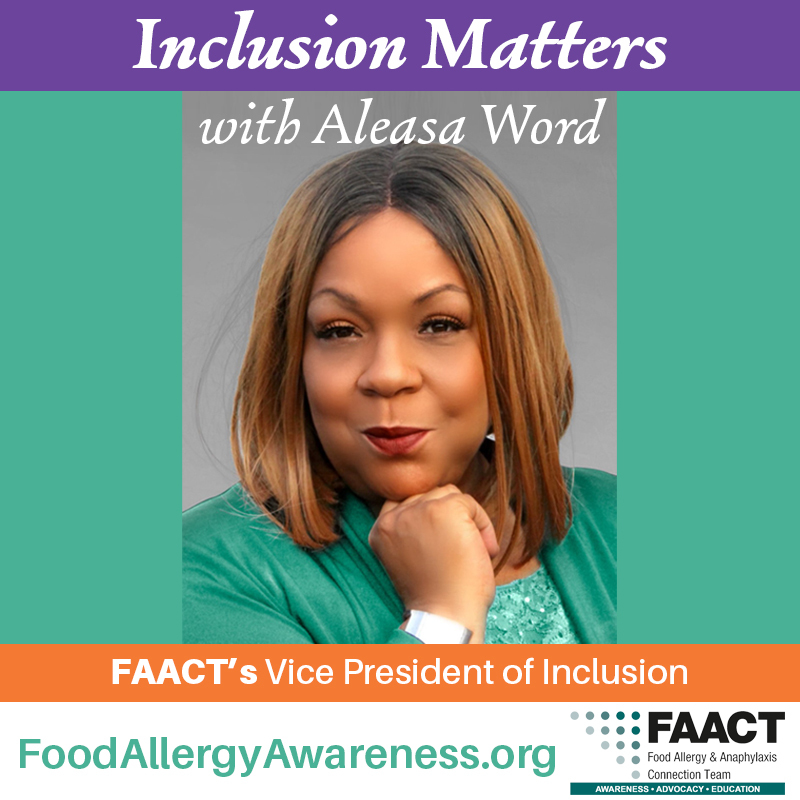
by Aleasa Word, FAACT Vice President of Inclusion Initiatives
February 2026
No two bodies respond the same way. The underlying mechanism that causes the response might be shared, but the presentation can look very different from person to person.
Let’s use hives as an example. At their core, hives are the body’s signal that something is happening. It is often tied to an allergic reaction or immune response. However, one person may experience small, localized hives while another develops widespread swelling, intense itching, or delayed reactions. The message is similar, but the expression is not.
Our brains work the same way, processing information, risk, emotion, and experiences differently. While this sounds like a simple concept, it can become hard to accept in spaces where safety, health, and evidence-based decision-making matter. In those environments, shared thinking can feel helpful and reassuring. Agreement can feel efficient and uniform responses can feel protective.
Same Thinking Creates Limits
In advocacy and healthcare spaces, we know that standardized guidance exists for good reasons. Clinical recommendations, protocols, and best practices are built on research, data, and professional expertise. These frameworks save lives and provide critical guardrails.
But problems arise if we mistake shared guidance for identical interpretation or application. It can lead us to assume that if two people follow the same recommendations, they should make the same choices.
People can share the same commitment to safety while navigating it differently. Context matters. Environment matters. Prior experiences matter. Access to resources matters. Emotional load matters.
Two caregivers can be responsible, informed, and even cautious but make different choices about how they manage daily risk. That difference does not automatically signal carelessness or defiance. It simply reflects thoughtful adaptation—adapting how they manage risk in a way that makes sense for their families.
Why This Matters
When we allow space for differences, we create communities of compassion, empathy, and trust. If we don’t, people begin to withdraw, engage in unhelpful conflict, stop asking questions, or even feel pressured to agree. In our food allergy community, silence doesn’t always equal safety. It can push people into patterns of being silent at the moments when they need to speak up the most—for themselves and others.
One of the most common fears we share as humans is not belonging. When we don’t accept that others think differently, we compromise that as well as standards and beliefs. This way of thinking is not meant to condone thinking patterns that harm people but instead thinking that broadens horizons and leave space for evolution.
Evidence-based recommendations from board-certified physicians matter. But we must also recognize that we apply the same guidance with a different lens. We can hold firmly to safety without insisting that everyone approach risk the exact same way. Acceptance does not always equate to agreement.
This could be as simple as saying, “We are both prioritizing safety even if our approaches vary.” This mindset allows our community to remain aligned around shared goals without turning differences into division. Otherwise, we may incorrectly interpret questions as criticism or assume disagreement equals irresponsibility. We can confuse our own personal comforts with universal truth.
Our challenge is to respect that we all have the same intentions: informed care, safety, and shared community.