When Inclusion Feels Like a Fight: Understanding Resistance in the Food Allergy Space
Subcategories
When Inclusion Feels Like a Fight: Understanding Resistance in the Food Allergy Space
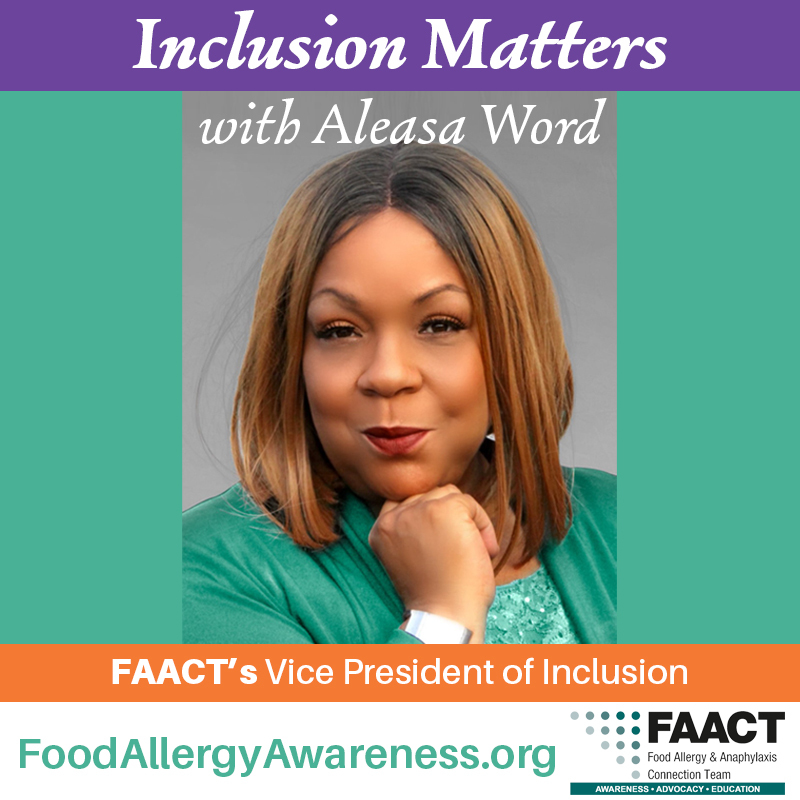
by Aleasa Word, FAACT Vice President of Inclusion Initiatives
April 2026
There’s a particular kind of frustration that doesn’t come directly from living with or managing food allergies. This frustration is one we don’t often like to talk about. We ignore it. We make excuses for it. We avoid it. Yet no matter how often we use these tactics to manage our feelings, it comes back over and over again.
This frustration comes from people. The ones who push back. The ones who roll their eyes at us once they find out food can be a problem for us. The ones who act like making space for food allergies is nothing more than an annoying inconvenience we made up. The people who, no matter how clearly you explain it, seem to have their heels dug firmly into the sand box of “I won’t listen to or accommodate YOUR food allergy.”
If you’ve ever dealt with that kind of energy, you know…it can feel like sandpaper on your spirit.
Origins of Resistance
Let’s think about what may sit underneath this resistance. It’s often one question: “Why should we have to change?”
Some people genuinely believe:
- “This is too much.”
- “People are too sensitive these days.”
- “We didn’t have all these rules before.”
- “Why should everyone else have to adjust?”
To them, food allergy accommodations can feel like a disruption to their normal. And when people feel like their normal is being challenged, they don’t always respond with curiosity—they may respond with defensiveness.
Understanding Different Mindsets
When someone refuses to budge, it’s rarely just about the food. For some, being asked to change feels like criticism. For others, it feels like a loss of autonomy. And for many, it’s simply unfamiliar… and unfamiliar things can feel threatening. So instead of leaning in, they push back. And sometimes they push back REALLY HARD!
They stop listening. They double down. They become downright oppositional, even when the request is reasonable. And not because the need isn’t valid…but because their emotional response is louder than their understanding.
We Still Need Safety
Safety. A simple word that doesn’t always come with simple solutions. This is where the tension lives. Because while someone else is processing their discomfort, you’re protecting your life. You’re trying to avoid cross contamination and navigate a world that was not built with food allergies in mind.
How do you deal with people who won’t meet you halfway or won’t allow for a reality other than what they see or experience?
Compassion Without Compromise
Understanding why someone resists change does not mean you are excusing their harmful attitudes or behaviors. It doesn’t mean you’ve lowered your standards for safety or stopped advocating for yourself or the community. What it does is give you more options for your response. If you meet resistance only with resistance or frustration, the cycles never changes.
Shifting the conversation can create an opening for change. Sometimes we need to lead with shared humanity, and at other times we will need to lead with context. Here are two helpful statements I’ve heard over the years:
- I know this might feel like a lot, but this is about safety, not preference.
- Help me understand what feels difficult about this for you.
That last one is powerful because it invites a person to move from defense mode and into reflection. Not everyone will respond well, but some will, and that is progress.
When logic doesn’t land, impact sometimes does. People may not understand the details of cross-contact, but they can understand exclusion:
- When I can’t eat safely, I can’t participate.
- It’s not just about food. It’s about being able to be here fully.
That reframes the conversation. Now it’s not about inconvenience, it’s about inclusion.
Knowing When to Pivot
Let’s also be honest. Some people are not ready to change. No matter how clearly you explain it. No matter how patient you are. And in those moments, emotional intelligence matters just as much as advocacy. Because you have to ask yourself whether it’s the right moment to educate or time to simply protect your peace.
Sometimes, the most powerful choice is not to keep pushing against a closed door. Instead, the better choice may be to create or choose environments where the door is already open. I’ve had the opportunity to create environments for safety and care, join environments full of safety and care, and, when necessary, walk away from environments that simply refuse either.
Walking away does not mean defeat. It means you have an opportunity to do something better once you’ve exhausted your ability to work with mindsets that simply won’t budge.
What it Means to Build Better Spaces
This is why inclusion matters so much in the food allergy conversation. It’s not just about policies or checklists. It’s about culture. A culture where asking questions is welcomed, not judged. Where safety is seen as shared responsibility and people are willing to learn, even if they didn’t grow up with this awareness.
When inclusion is part of the culture, resistance decreases over time.
Final Thought
People who resist can feel exhausting—like constant friction. Like you’re always having to justify your existence in a space.
But here’s the truth. You should not have to fight to be safe nor shrink your needs to make others comfortable. At the same time, understanding the human side of resistance can give you tools to navigate it.
Some people will learn. Some people will grow. Some people will stay exactly where they are.
Your role is not to force people to change. Your responsibility is to stay safe, stay grounded, and continue to advocate for spaces where inclusion is not a debate…it’s a standard.