Different Tables, Different Realities: Food Allergies Across Cultures
Subcategories
Different Tables, Different Realities: Food Allergies Across Cultures
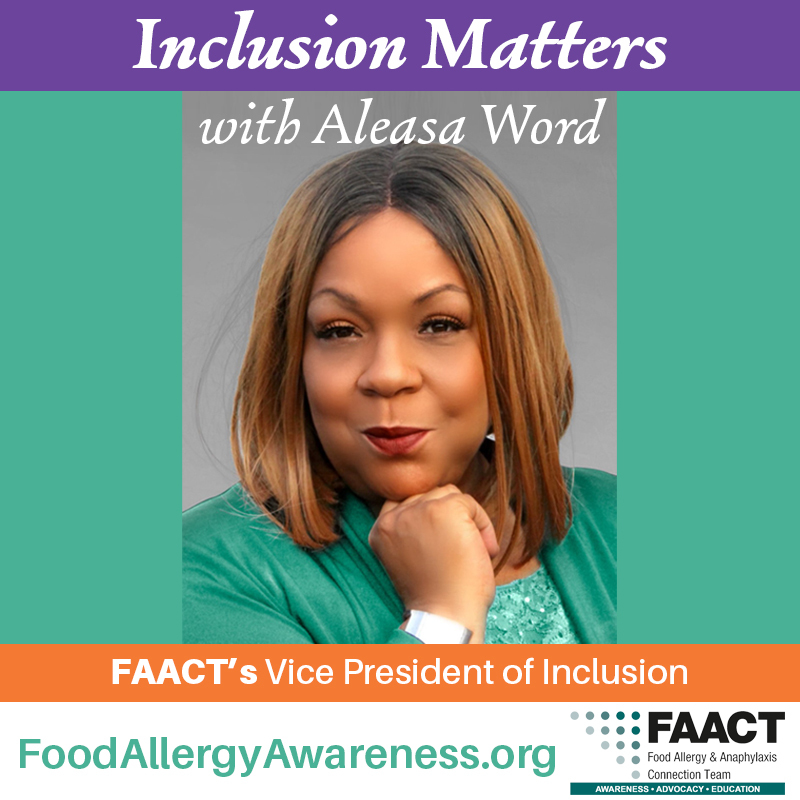
by Aleasa Word, FAACT Vice President of Inclusion Initiatives
May 2026
Jose’s parents read every label, ask detailed questions, and carry emergency medication everywhere they go. David’s grandparents encourage him to try just a little taste to get used to the food. Both children have food allergies, and despite what seems to be a dangerous scenario for David, both families care deeply for the children. Some might say, “if they care, why would they even consider the risk?” Truth is, it’s not always about caring. Sometimes, it’s about culture, and it is up to us to find ways to help the two meet in the safest way possible.
In past posts, I’ve mentioned that food allergies don’t live in a vacuum. Instead, they live inside the culture each of us experiences. It is that same culture that helps to shape how seriously we take our care, how we understand our care, and how children are protected in our care.
For many families in Western healthcare, food allergies are now the norm. They are widely recognized as real and important health conditions. There are policies in place. There is language that speaks to this health condition. There are allergy friendly products, classrooms, and menus. And there are emergency protocols in place. The expectation is clear that people must take this condition seriously.
Sadly, this truth many of us know is not the same truth experienced by all. In some cultures, food allergies are not as widely understood and are seen as exaggerated, imaginary, or rare. People in other cultures have different lived experiences that may tell a vastly different story than those in Western cultures. (Although even in some areas in Western culture, if no one ever talked about food allergies growing up, the concept can seem unimaginable or even attention seeking.)
When this happens, you will hear comments like:
- We didn’t have those growing up.
- Just try a little bite.
- You’ll grow out of it.
- It’s probably in their head.
- What did you do wrong?
Though comments like this can be jarring and hurtful, they are rooted in cultural norms, generational beliefs, and lack of exposure to accurate and understandable food allergy education.
Food itself can be deeply cultural. It shows identity. It can represent love and healing passed down through generations with pride shown in every dish. For some to refuse food can be seen as offensive and downright disrespectful. Refusing food is not just about saying no but instead it represents rejection.
For people living with food allergies, especially children, being put in positions like this can be hard. They are expected to be polite. They may not understand what self-advocacy means and have no idea how to set safe boundaries. Children are navigating a world where safety and belonging matter while cultural norms may put both at risk.
Medical practitioners should consider this when working with patients. A sense of cultural humility is essential. This does not mean someone has to know everything about every culture. Instead, it is about recognizing that your perspective is not the only one, and being willing to learn, listen, and adjust. It means understanding that different families may approach a food allergy diagnosis differently based on their background, and education provided must meet them where they are.
Healthcare professionals, educators, and caregivers in all spaces should be mindful in HOW they communicate. If instructions given don’t align with a family’s cultural framework, that could cause harm for the person with food allergies. An example might be telling someone with a newly diagnosed child to avoid all cross contamination. That means nothing if you aren’t sure they have a full understanding of cross contamination as it relates to large family gatherings, shared meals, and traditional cooking practices.
For many cultures, food is prepared communally. Recipes are shared. Utensils are shared. Things aren’t measured. Asking people to break from these traditions can seem demeaning or dismissive of cultural norms.
Here is where learning HOW to have conversations in the most meaningful way matters. You can ask questions like:
- How does your family traditionally prepare meals?
- Who is involved in cooking?
- What foods are most commonly used in your home?
- What feels difficult to manage with food allergies?
These types of question open doors that healthcare professionals often close by just giving general guidance and pamphlets. When families see healthcare providers, educators, or advocates who understand their cultural background, communication begins to shift. Trust begins to build. Questions seem safer to ask. Information then becomes receivable.
For children, this matters. A child who feels seen AND protected is more likely to speak up and feel less like a burden. When they see their culture respected along with their healthcare needs, they realize they don’t have to choose one or the other but instead learn to fully exist with both in a way that matters.
Understanding food allergies across cultures is not about erasing cultures. It’s about finding ways to integrate safety and care into them and finding new ways to educate, honor traditions, and adapt.
Different tables may possess different realities, but safety doesn’t have to be one of them.