How is an accurate diagnosis made?
Subcategories
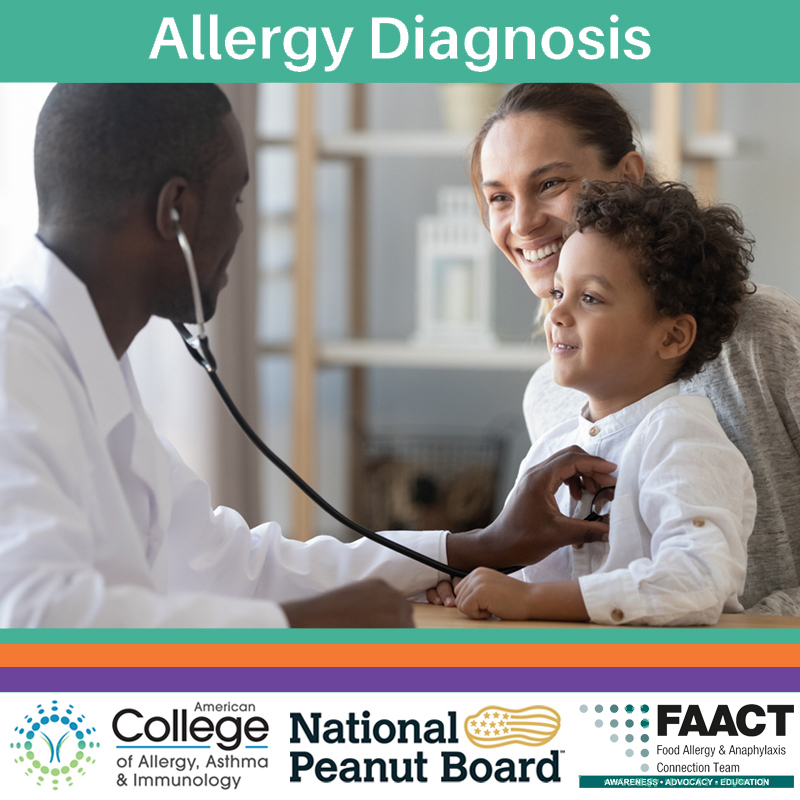
How Is An Accurate Diagnosis Made?
To make a diagnosis, allergists ask detailed questions about your medical history and your symptoms. Be prepared to answer questions about:
-
What and how much you ate
-
How long it took for symptoms to develop
-
What symptoms you experienced and how long they lasted
After taking your history, your allergist may order skin tests and/or blood tests, which indicates whether food-specific immunoglobulin E (IgE) antibodies are present in your body:
-
With a skin-prick test, a liquid containing a tiny amount of the food allergen is placed on the skin of your arm or back. Your skin is pricked with a small, sterile probe, allowing the liquid to seep under the skin. The test, which isn’t painful but can be uncomfortable, is considered positive if a wheal (resembling the bump from a mosquito bite) develops.
-
Blood tests, which are a bit less exact than skin tests, measure the amount of IgE antibody to the specific food(s) being tested. Results are typically available in about a week and are reported as a numerical value.
Your board-certified allergist will use the results of these tests in making a diagnosis:
- A positive result does not necessarily indicate that there is an allergy, though a negative result is useful in ruling one out.
- Skin tests alone are not considered enough to diagnose a food allergy.