
Navigating Dining Services at College
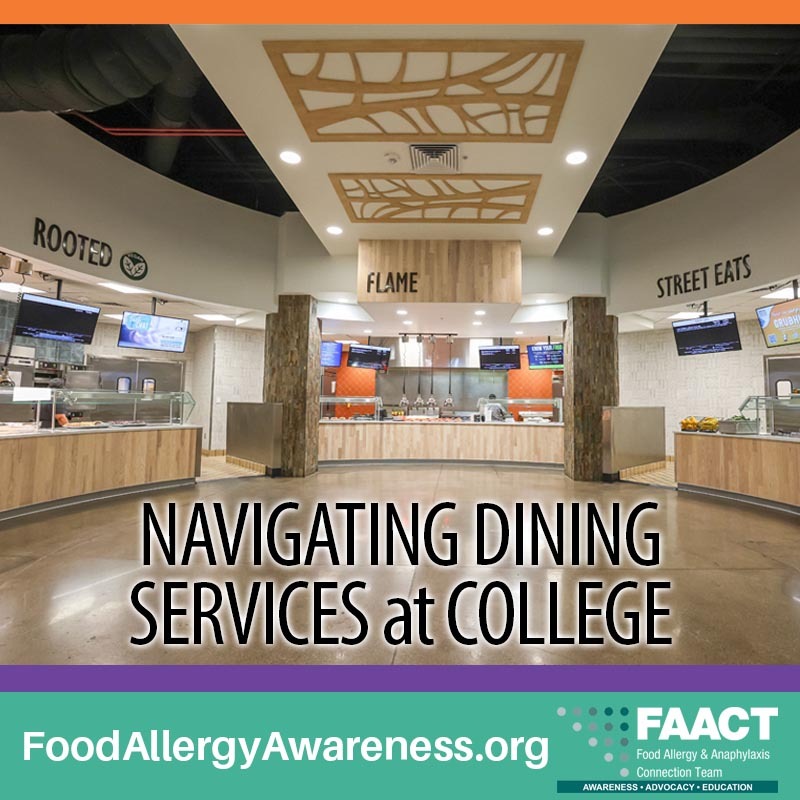
Navigating Dining Services at College
by Caroline Moassessi, FAACT Vice President of Community Relations
For families managing food allergies, college isn’t just about classes, roommates, and independence—it’s about navigating an entirely new food environment. Dining halls, late-night snacks, social events… every choice matters. The habits your student builds early can shape not only their safety but also their confidence and independence.
Let’s explore what safe and inclusive eating on campus can look like. Every college is different, so flexibility—and the ability to pivot—is key. Use this blog as a starting point to sit down with your student and build a strategy together.
Common Dining Options
Campus dining can vary widely, but most schools offer a mix of the following through meal plans and swipe systems.
On-campus options:
- Cafeteria (buffet style), often with self-service
- Dining halls with buffet and made-to-order stations (pasta, burgers, burritos, etc.)
- Marketplace-style shops (snacks, drinks, yogurt, grab-and-go meals)
- Top allergen-free stations
- Allergen-friendly pantries
- Fast-food chains located on campus
- Coffee shops and cafés
- Catered campus events (academic, social, athletic)
- Meal credits for local restaurants
Dorm-based options:
- In-room refrigerator and microwave for simple meals
- Shared student kitchens (often within dorm buildings)
- Suites with kitchenettes
- Apartment-style dorms with full kitchens
Off-campus options:
- Sorority or fraternity housing (sometimes with private chefs)
- Apartments or houses with roommates
- Restaurants, social events, and private gatherings
Build a Safe and Inclusive College Eating Strategy
Every campus is different—and your student’s plan should be too. It’s important for your student to take the lead in building and owning their strategy.
- Set up official accommodations (if you haven’t already).
- Register with the Office of Disability Services (sometimes called Academic Support).
- Ensure accommodations are documented and communicated.
- Identify key contacts.
- Find out who manages food allergies within Dining Services, such as the:
- Dietitian
- Dining Services Director
- Executive Chef
- Request a meeting as early as possible to discuss safe meal planning.
- Understand the dining options.
- Review all dining options included in the meal plan.
- Determine if there are multiple dining halls—and whether access is limited.
- If a meal plan is required but not usable, explore waiver options through FAACT’s College Resource Center (Legal Considerations).
Ask questions! When meeting with Dining Services, walk through a real day of eating, including:
-
- How will meals be ordered for breakfast, lunch, and dinner?
- Which dining locations are safest for your student’s allergies?
- Do menus or procedures change on weekends?
- How are food allergies communicated to staff?
- For athletes or student groups: who ensures meals ordered by coaches or staff are safe?
Also ask about:
-
- On-campus marketplaces and safe packaged food options
- Access to allergen-friendly foods outside traditional dining halls
- Plan for dorm living.
- Are refrigerators and microwaves provided?
- If not, what size/wattage is allowed?
- Can students request their own to avoid cross-contact?
- What are the rules for small appliances (e.g., electric kettle)?
- Are kitchens or kitchenettes available?
- Are shared kitchens safe—or too risky due to cross-contact (especially ovens)?
- Are refrigerators and microwaves provided?
Prepare for Real Life (and Real Moments)
Safe eating isn’t just about food—it’s about confidence, flexibility, and social connection.
- Help your student understand that managing food allergies independently is a strength.
- Encourage them to speak up and advocate for their needs.
- Normalize that their experience may look different—and that’s okay.
- Build a Plan B for when things don’t go as expected:
- Keep safe staple foods on hand (crackers, bread, seed butter, etc.)
- Identify go-to safe restaurants
- Consider keeping a gift card for quick, safe ordering
Eating on campus can—and should—be safe and enjoyable when your student has a plan that works for them. Stay tuned for our upcoming blog on Off-Campus Eating and Socializing. And remember, FAACT is always here to support you and your family every step of the way!