Disaster Preparedness With Food Allergies: What Families Shared About Safe Food During Emergencies
Disaster Preparedness With Food Allergies: What Families Shared About Safe Food During Emergencies
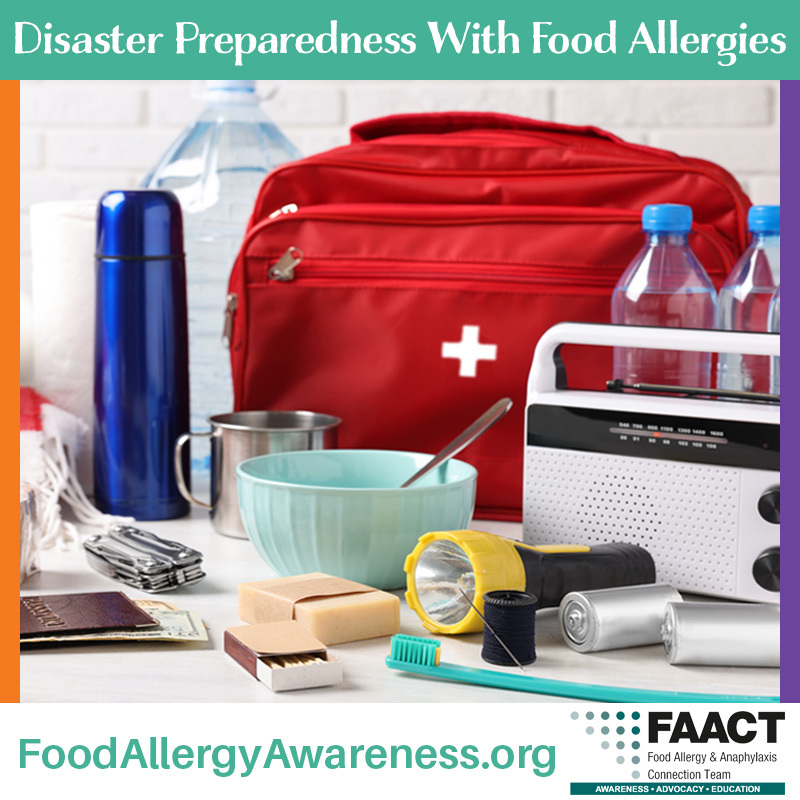
Disaster Preparedness With Food Allergies: What Families Shared About Safe Food During Emergencies
by Nicole DellaSantina, MPH, FAACT Vice President of Public Health
Emergencies can disrupt daily life quickly and unexpectedly. Power outages, wildfires, winter storms, evacuations, and supply chain interruptions can all affect how families access food, medications, and essential resources. For families managing food allergies, preparedness involves an added and often overlooked layer: ensuring consistent access to safe food and life-saving medications during any emergency situation.
To better understand the real experiences of our community, FAACT conducted a national needs assessment survey focused on disaster preparedness and access to allergy-safe food among households managing food allergies and related medical dietary conditions. Households from across the United States shared their insights, challenges, and lived experiences.
What we heard reinforces what many families already know: preparedness is something families are thinking about, but meaningful gaps still exist. More than half of respondents described their household as only “somewhat prepared” for a disaster or emergency. The data also revealed a practical concern: over one-third of households reported having less than three days of allergy-safe food available for emergencies, and only a small portion reported having supplies that would last beyond 10 days.
Unlike traditional emergency kits, allergy-safe foods are not always affordable, easy to store, or widely available in shelf-stable formats. Many families must plan carefully, rotate supplies, and absorb higher costs just to maintain a safe reserve. Several respondents also highlighted how difficult it can be to find non-perishable foods that meet complex dietary needs, especially for households with children managing multiple food allergies.
When emergencies and disasters occur, managing food allergies often becomes more complex. Families participating in the survey reported experiencing a range of natural disasters in the past five years, most commonly winter storms and prolonged power outages, along with hurricanes and wildfires. These conditions can limit grocery access, disrupt refrigeration, and make safe food preparation more difficult.
Nearly 43% of respondents shared that finding allergy-safe food during an emergency was difficult or that options were limited. For some families, the challenge was not just availability but trust. Several respondents indicated that they avoid emergency food resources altogether because they are unsure whether the food will be safe for their household. Concerns about unclear labeling, cross-contact risks, and limited allergy-aware options were also mentioned throughout the responses. As one participant noted, emergency food support may be available but not necessarily safe. This highlights an important reality within the food allergy community: access to food is not always the same as access to safe food.
The survey also reflected the medical complexity many families manage. Nearly half of households reported managing asthma alongside food allergies. Encouragingly, about 70% of respondents reported including epinephrine or other allergy medications in their emergency supplies, demonstrating thoughtful and proactive planning even as concerns about cost, storage, and temperature regulation remain.
Across open-ended responses, families consistently emphasized the need for clearer labeling, more allergy-aware shelters and distribution sites, additional shelf-stable safe food options, and practical guidance on how to prepare for emergencies with food allergies. Many also shared that they feel a strong responsibility to be self-sufficient because they are unsure whether emergency systems will be able to accommodate their needs.
These findings point to a broader truth: preparedness for food allergy families does not begin and end in the home. It extends into schools, community food programs, emergency planning, and general awareness. Food allergies are a medical condition, not a preference, and inclusive preparedness conversations should reflect that reality.
FAACT’s Disaster Resource Center provides a centralized place for families to access preparedness lists, tools, and guidance designed specifically for households managing food allergies and medical dietary needs. As we continue listening to the community and observing how disaster preparedness and response practices evolve, these resources will be regularly updated to reflect both insights from this needs assessment survey and real-world changes in emergency planning.
Preparedness can feel overwhelming, especially when food allergies already demand daily attention. Taking small, intentional steps can make a meaningful difference and help families feel more confident over time. We’re grateful to every family who participated and shared their experiences. These responses reinforce what many have long known: preparedness is not one-size-fits-all, and safe food access during emergencies deserves real attention in disaster planning. FAACT will continue advancing practical, community-informed solutions so families managing food allergies feel supported and better prepared.