When Every Minute Counts: Finding Safe Food and Trusted Resources Before, During, and After a Disaster
When Every Minute Counts: Finding Safe Food and Trusted Resources Before, During, and After a Disaster
When Every Minute Counts: Finding Safe Food and Trusted Resources Before, During, and After a Disaster
by Nicole Della Santina, MPH, FAACT Vice President of Public Health
Over the past several weeks, we've watched communities across the country face very different disasters. Families in Hawaiʻi are still recovering from hurricanes and flooding. Communities across Indiana are cleaning up after historic flooding. Residents in eastern Washington and northern Nevada were forced to evacuate due to fast-moving wildfires. Unfortunately, these aren't isolated events—they're reminders that disasters can happen anywhere, often with little warning.
You may be preparing your family before an emergency happens, trying to make decisions in the middle of one, or beginning the long process of recovery. Your needs may be different at each stage, but having trusted information and knowing where to turn for help can make a difference.
While every disaster looks different, the questions many families living with food allergies ask are remarkably similar:
- Where will we find safe food?
- Will emergency shelters be able to accommodate our needs?
- What happens if we have to leave medications behind?
At FAACT, we understand these questions because our Disaster Resource Center was created from lived experience. Disaster survivors, parents of children with food allergies, and public health professionals helped develop resources around the challenges families may face when everyday routines and access to safe food are suddenly disrupted. The Resource Center is organized in the same way that disasters unfold: Before, During, and After, with practical checklists, planning guides, and resources specifically for people living with food allergies.
Before a Disaster: Small Steps Make a Big Difference
Preparedness isn't about having the perfect emergency kit or anticipating every possible scenario. It's about giving yourself a few more options when life abruptly changes.
If you have time to prepare, a few simple steps can make a difference:
- Keep at least two epinephrine devices available and check expiration dates regularly.
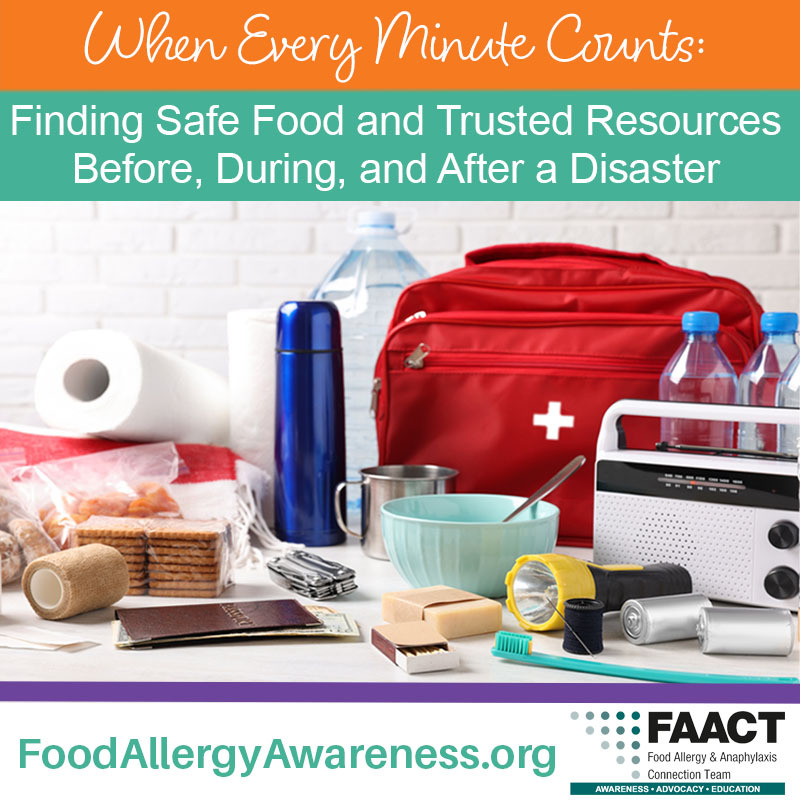
- Build a Go-Bag with medications, copies of prescriptions, emergency contacts, allergy-safe snacks, and shelf-stable foods your family can safely eat.
- Keep your emergency action plan on your phone and have a paper copy available.
- Talk with your family about where you would go in an evacuation and what everyone should take with them.
During a Disaster: Focus on Safety First
When an emergency unfolds, protecting yourself and your family comes first. If local officials issue an evacuation order, don't delay leaving because you're trying to gather additional belongings. If you have time, take medications, emergency supplies, and important documents. If you don't, get to safety. You can begin replacing what you need once you're out of danger.
Getting Reliable Information: Start with official emergency alerts from your local and state emergency management agencies, the National Weather Service, and local public health officials.
Watch Duty is another valuable resource for following wildfires and floods in real time, including changing conditions and incident information. It can be a helpful complement to official emergency alerts.
If you need help finding food, shelter, transportation, healthcare, or other community services, 2-1-1 can connect you with resources in your area. The American Red Cross provides sheltering and disaster assistance in affected communities, while FEMA can provide information about federal assistance and recovery resources when federal assistance is available.
Finding Food You Can Safely Eat: Shelters and food distribution programs will not know that you have medically necessary dietary restrictions unless you tell them. Let staff or volunteers know what you need when you arrive.
Don’t be afraid to ask questions. If you're tired, stressed, or unsure where to begin, start with a few basics:
- May I review the ingredient label, and is the food in its original packaging?
- Are there options that meet my dietary needs?
- How is food being prepared, and is there a risk of cross-contact?
- If safe food isn't available here, is there another pantry or organization that may be able to help?
- Can someone help me locate an open pharmacy or medical care if I need it?
You may not find the perfect solution, but asking questions lets people know what you need and may help them connect you with additional resources.
After a Disaster: Recovery Takes Time
Recovery doesn't end when the floodwaters recede, the fire is contained, or an evacuation order is lifted. As you begin rebuilding your routine, replace medications and safe foods, restock emergency supplies, and think about what worked and what you might do differently next time. You don't have to rebuild everything at once—recovery takes time.
Want to help other families facing disasters? Consider donating shelf-stable, allergen-friendly foods when they're accepted by local food banks or disaster relief organizations. Families managing food allergies often have fewer safe choices when their normal food sources are disrupted, and thoughtful donations can help fill an important gap.
Financial contributions can also help food banks and disaster relief organizations purchase what is needed most and use their resources efficiently. Not sure where to donate? Reach out to us at FAACT, and we can help connect with you organizations serving affected communities.
You Don't Have to Navigate a Disaster Alone
Whether you're preparing for the next emergency or trying to find safe food and reliable information today, there are organizations ready to help. FAACT is proud to work alongside partners like AAFA and FOODiversity, as well as food banks, emergency managers, healthcare providers, and community organizations across the country to help families living with food allergies stay safe before, during, and after disasters.
If you’re having trouble finding allergy-safe foods after a disaster, consider reaching out to your local FAACT support group. Local members may be able to help you identify allergy-friendly resources in your community or connect you with safe food options. The food allergy community is a special group, and we have seen time and again how people step up when another family needs help. If you need something, don’t hesitate to ask.
We encourage you to bookmark FAACT's Disaster Resource Center today. We hope you never need it, but if you do, we want it to be one less thing you have to search for when every minute counts.