It’s About Inclusion, Not the Cupcake
Subcategories
It's About Inclusion, Not the Cupcake
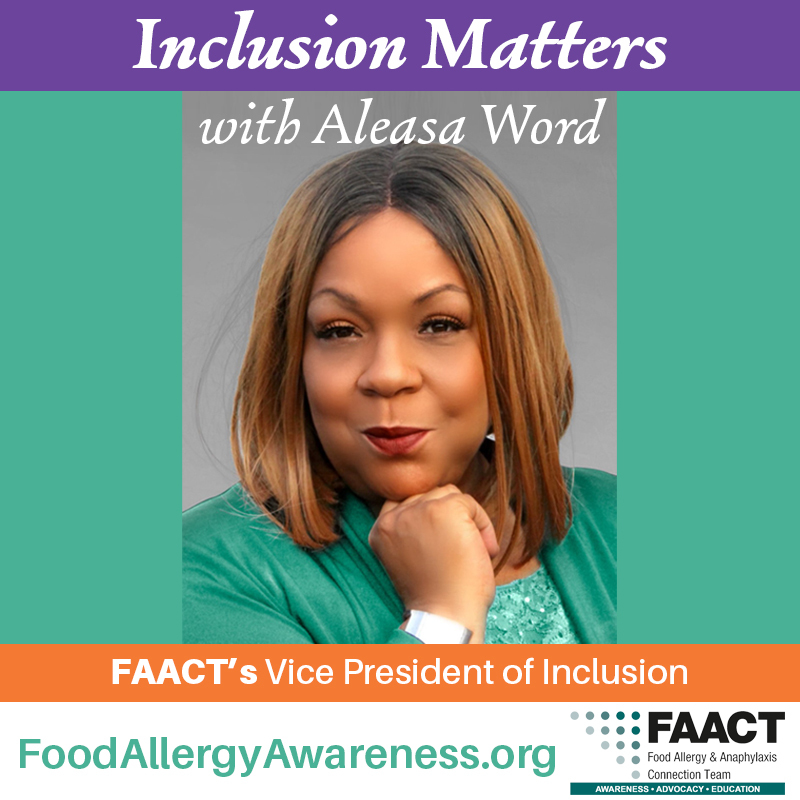
by Aleasa Word, FAACT Vice President of Inclusion Initiatives
July 2026
I asked our community on Instagram to consider one simple question: What do think of when you look at a cupcake?
For many people, the answer is straightforward: A dessert, celebration, birthday party, or some other type of get together. For many food allergy families, however, the answer is more complicated. The cupcake itself is not the issue—it’s what surrounds it.
Not long ago, social media was captivated by a viral debate referred to as the "man versus bear" thought experiment. While people argued over which choice made more sense, many pointed out that the conversation was never really about bears. It was about lived experience, how past experiences shape our perception of risk, and the invisible calculations people make every day to protect themselves.
Food allergy families understand this concept well. Every day, we come across situations that others may view as harmless.
- A classroom snack
- A restaurant meal
- A summer camp activity
- A family gathering
- A cupcake
While others may see a simple moment, food allergy families often see a series of questions.
- Who prepared the food?
- Were ingredients verified?
- Could there be cross contact?
- Is epinephrine available?
- Will my child feel included?
- Will people think I am overreacting if I ask questions?
These calculations are often invisible to everyone else in the room. The challenge is not always the food allergy. Sometimes the challenge is convincing others that the concern deserves consideration.
Many families have experienced comments like these:
"It can't be that serious."
"A little bit won't hurt."
"We've always done it this way."
"You're doing too much."
These comments are often not meant to be hurtful, but unfortunately, they turn out that way. In many cases, they come from a lack of understanding. People cannot always see the factors that influence another person's decision making. Yet understanding does not have to come before respect.
That may be one of the most important lessons food allergy families can share: You do not need personal experience with food allergies to respect the precautions someone else takes. Nor do you have to fully understand another person's concerns to take them seriously. And you certainly don’t have to agree with every safety decision a person makes to recognize that it is being made from a place of responsibility and care.
When we listen to lived experiences, we create opportunities for safer and more inclusive environments. Schools become more supportive and workplaces become more thoughtful. Restaurants become more accommodating and communities become more inclusive.
The goal is not perfection but awareness. Creating spaces where people feel seen, heard, and respected matters!
So, in the end, this discussion was never really about the cupcake. The cupcake simply reminds us of something larger: People carry experiences, responsibilities, and concerns that we cannot always see. Empathy begins when we acknowledge that what looks simple to one person may carry a very different meaning for someone else.